Joining the Predictive Modeling in Medicine Lab (PMML) at UT Austin
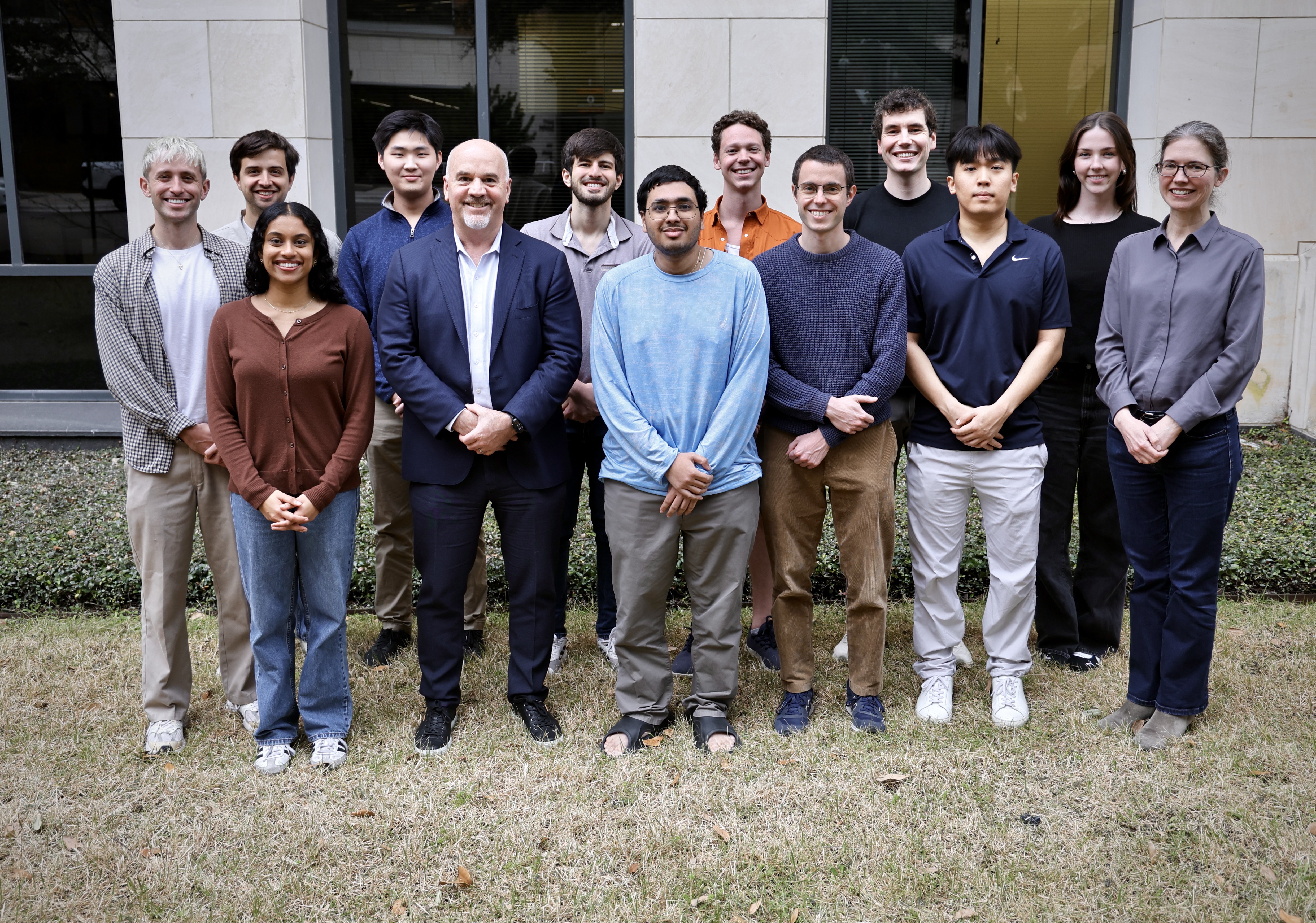
I joined Prof. Charley Taylor's Predictive Modeling in Medicine Lab, part of the Center for Computational Medicine at the Oden Institute and Dell Medical School, UT Austin.
A New Chapter
On October 25th 2025, I joined the Predictive Modeling in Medicine Lab (PMML), led by Prof. Charley Taylor, as a postdoctoral researcher at the Oden Institute for Computational Engineering and Sciences, with an affiliation at the Texas Advanced Computing Center (TACC). It is an exciting next step that builds directly on my PhD work on patient-specific vascular modeling, and I could not be more thrilled to be part of this group.
The Lab
The PMML is part of the Center for Computational Medicine, a collaboration between the Oden Institute and the Dell Medical School at The University of Texas at Austin. Established in January 2025, the Center draws on medicine, biology, engineering, mathematics, and computational science to advance personalized healthcare.
A central theme of the Center is the development of medical digital twins: mathematical models of disease that go beyond medical imaging to incorporate modalities like genomics and metabolomics, continuously updated with personalized patient data. These models are translated into tools that help clinicians make data-driven treatment decisions based on a patient’s history and risk profile. The work is grounded in computing and machine learning, supported by the Oden Institute’s leadership in digital twin research and the high-performance computing resources at the Texas Advanced Computing Center (TACC).
What I’ll Be Working On
My research integrates artificial intelligence, medical imaging, and computational modeling to study physiology and advance medicine. During my PhD in Mechanical Engineering at UC Berkeley, working with Prof. Shawn Shadden, I combined biomechanics, machine learning, and image-based modeling to improve vascular segmentation and simulation—work that led to the open-source tools SeqSeg and MeshGrow for automated vascular reconstruction and simulation-ready mesh generation from medical images.
At UT Austin, I am expanding this work to explore clinically driven applications of AI and simulation, with the goal of developing digital tools that bridge computational models and patient care. Joining the PMML and the broader Center for Computational Medicine is a fantastic opportunity to push these methods toward real clinical impact, alongside an incredible group of researchers spanning computational engineering and medicine.
More to come soon!
Enjoy Reading This Article?
Here are some more articles you might like to read next: